Morocco's public procurement reform: what decree 2-22-431 changes
Digitalization, a bigger role for SMEs, responsible procurement, national preference: the main thrusts of Morocco's public-procurement reform and what they mean for businesses.
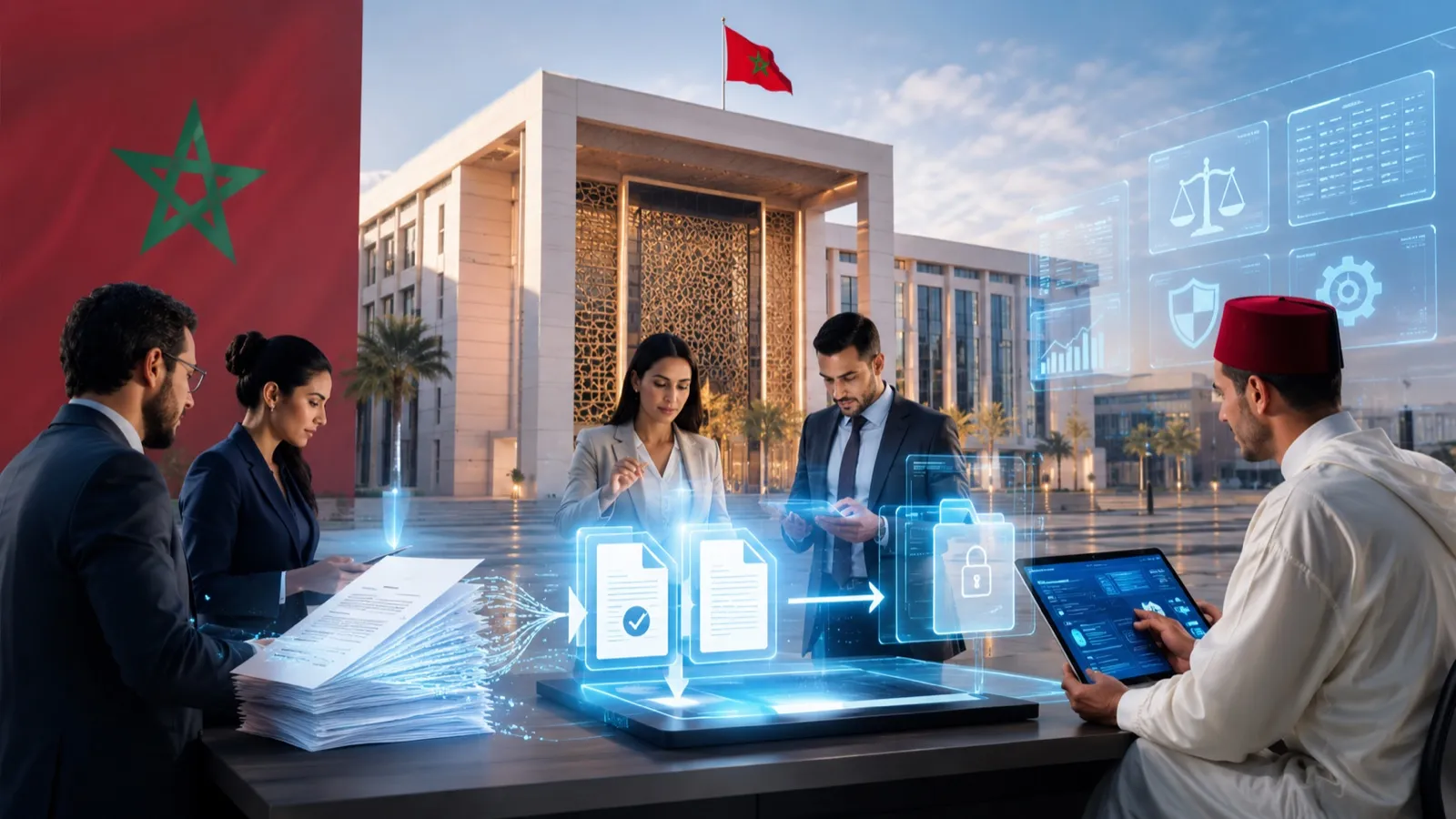
Morocco’s public procurement framework has been modernized by decree no. 2-22-431, which succeeds the regime in force since 2013. The reform turns on three thrusts: generalizing digitalization, widening the role of SMEs, and promoting more responsible public buying. For a business, the stakes are operational rather than legal: understanding what changes in order to bid better.
This article outlines the broad direction of the reform. For any decision, refer to the official text published in the Bulletin officiel and, where needed, to specialist advice.
A new framework updating the 2013 one
The previous rules were more than a decade old. The new decree overhauls procedures, clarifies terminology, and absorbs practices that had become standard — notably the use of digital tools and heightened expectations around transparency.
Digitalization at the heart of the reform
This is the most visible change. Publishing notices, downloading tender files, submitting bids and exchanging with the buyer all happen online, through the national public-procurement portal. For an SME, this means:
- fewer trips and printing costs;
- full traceability of the procedure;
- but also a need to be comfortable with digital tools and the electronic signature.
A bigger role for SMEs
The reform reinforces the levers designed for small and medium-sized firms: a reserved share of orders for SMEs, allotment that splits large contracts into accessible lots, and financial mechanisms (advances, proportionate guarantees) that ease the cash-flow barrier. These are rules that work in your favour — provided you know them.
National preference and responsible procurement
Two further orientations round out the picture:
- national preference, which may favour national offers and products under certain conditions;
- responsible public procurement, which builds environmental and social criteria into public buying.
The exact terms (rates, thresholds, conditions) belong to the text and its implementing orders: check them case by case.
What it changes for you, concretely
- Get equipped for digital: a portal account, an electronic signature, files in the right format.
- Use the SME provisions: spot the reserved lots and claim the preference where it applies.
- Mind compliance: digital procedures are unforgiving of an incomplete or late file.
In short
The reform leans in the SMEs’ favour: more transparency, less paperwork, stronger access levers. The challenge shifts to monitoring — spotting, among hundreds of digital notices, the ones that fit you. That is exactly what Ogerant does: filtering the flow and surfacing only the opportunities that matter to you.
Written by
The Ogerant team
The Ogerant team analyzes public procurement in Morocco and beyond. We publish practical guides, trend analyses and field lessons that help SMEs win more public tenders.
See the Ogerant platform →