Public procurement in Morocco: the hidden cost of multiple platforms and fragmented monitoring
National portal, supplier spaces, sector websites, email and internal files: why tender monitoring becomes fragmented, the risks this creates, and how to build a single control point.
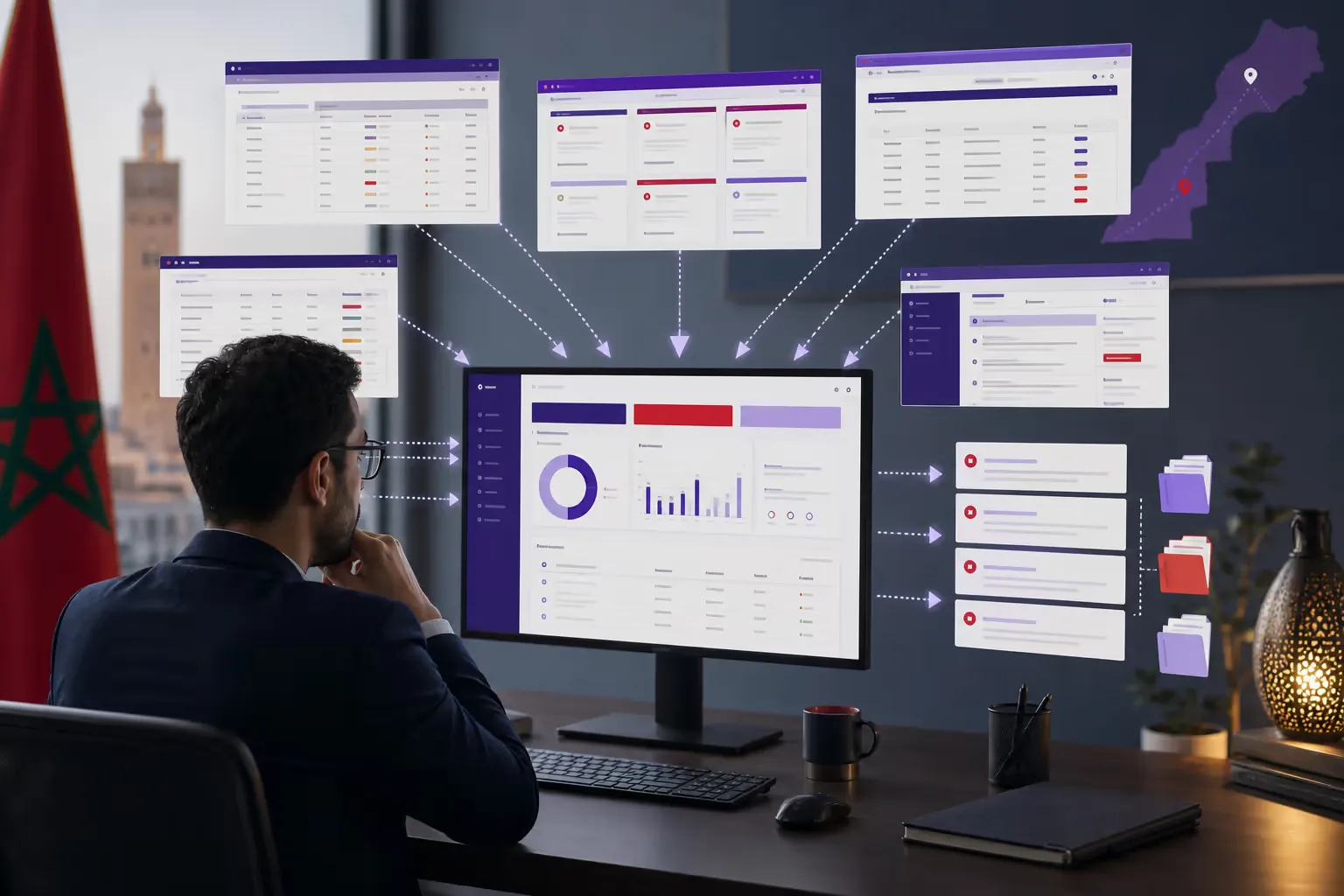
Morocco has a common Public Procurement Portal. Yet tender monitoring in many SMEs still means a daily tour: open the national portal, check institutional websites, scan email, download documents and copy deadlines into spreadsheets.
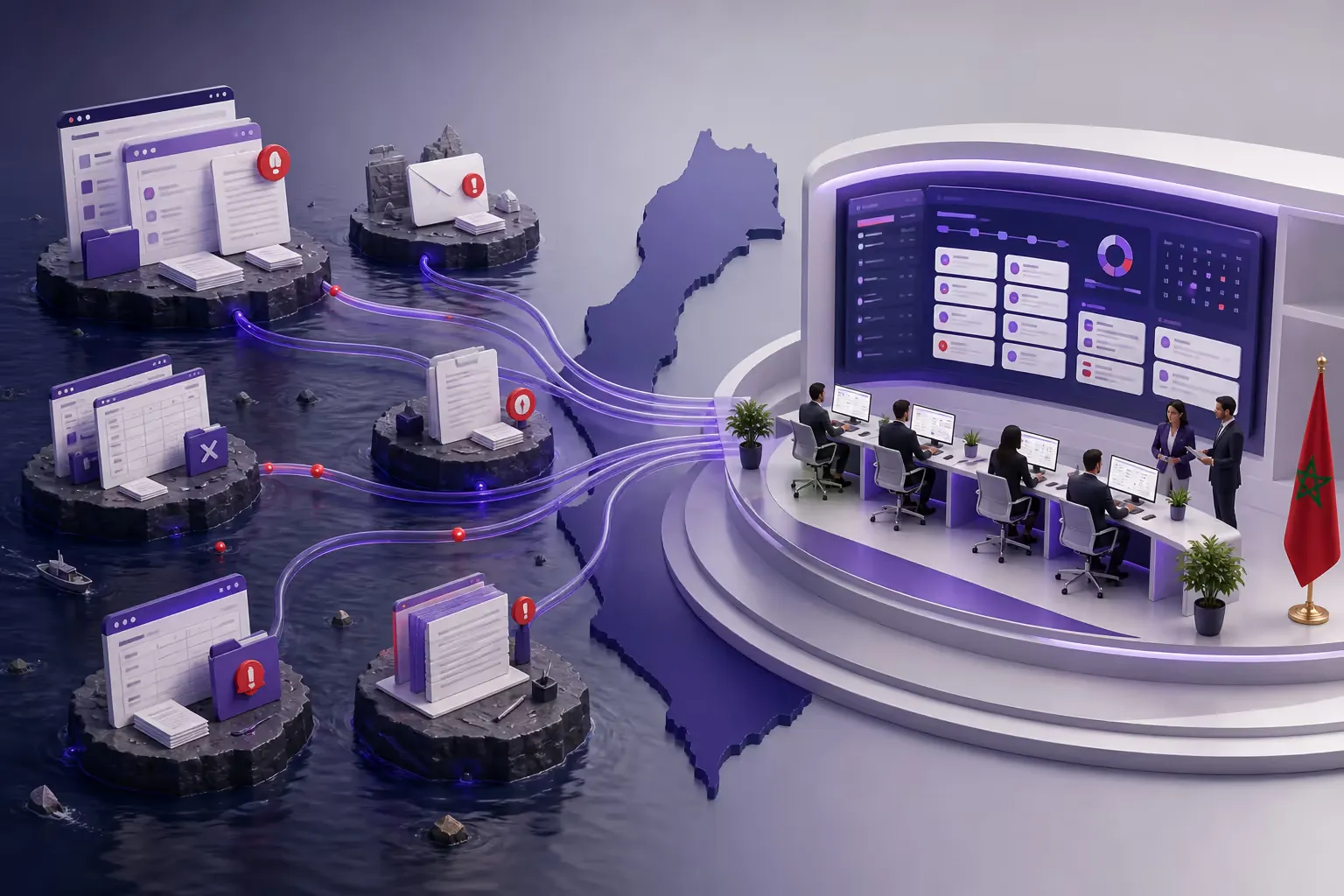
Short answer: the problem is not a total absence of regulatory centralization. It is the absence of a supplier control tower that turns multiple sources, formats and notifications into one deduplicated list of opportunities, decisions and tasks.
An aggregator must never replace the official source. A supplier nevertheless needs an operational layer that prevents wasted time between discovery and submission.
One common portal, a multichannel supplier journey
The Moroccan Public Procurement Portal describes itself as the common exchange platform. It provides current consultations, purchase orders, minutes extracts, final results, completion reports and procurement forecasts.
At the same time, major organizations maintain their own entry points:
- OCP directs suppliers to OCP e-Supply for open tenders;
- ONCF offers tender search by segment, family, dates, keywords or estimate;
- ANEP maintains a tender section .
These spaces do not necessarily mean that every procedure exists entirely outside the national portal. They do show that suppliers manage several entry points, accounts, taxonomies, notifications and document libraries.
Where fragmentation actually occurs
Discovery
The same requirement may be described as application maintenance, third-party maintenance, evolution services or technical assistance. Monitoring based on five exact keywords sees only part of the market.
Qualification
Platforms expose different fields. Estimate, place of performance, qualifications, lots, guarantees and mandatory visits may require opening several PDFs before a manager knows whether an opportunity deserves analysis.
Updates
An initial notice is not enough. Deadline extensions, corrigenda, questions and revised documents can reverse a decision. If an update arrives through another channel, it may never reach the internal file.
Teamwork
The source is on a portal, documents are on a shared drive, Go/No-Go sits in WhatsApp, pricing in Excel and approval in email. The risk lies in the missing connection between them.
History
After award, price, competitors, rejection reasons and execution performance are rarely linked to the next opportunity. The company repeats its analysis rather than learning from earlier bids.
The hidden cost for an SME
Low-value time
If two people each spend 45 minutes per day opening portals and filtering alerts, the company consumes roughly 30 hours per month before document analysis. This is an illustrative calculation, not a national average: measure your own process for four weeks.
Missed opportunities
A relevant tender may be found after a mandatory visit or too late to arrange a guarantee. The loss never appears in the accounts, but it directly reduces pipeline.
Duplicates
Two people qualify the same procedure discovered through different sources and download different document versions.
Inconsistent decisions
Sales classifies an opportunity as “bid” while the technical director considers it out of scope. Without a shared decision rule, the conflict appears late.
Wrong versions
The local folder contains the original tender rules while a corrigendum has changed a deadline or requirement. Centralization must preserve source and version, not merely store a PDF.
What a single control point must contain
| Layer | Data to unify | Expected result |
|---|---|---|
| Sources | official URL, portal, supplier space | traceability back to the original |
| Identity | reference, buyer, subject, lot | reliable deduplication |
| Eligibility | qualifications, references, visit, guarantees | faster Go/No-Go |
| Calendar | publication, questions, visit, submission | alerts and capacity planning |
| Documents | version, collection date, corrigenda | an up-to-date working file |
| Collaboration | owner, contributors, approvals | explicit accountability |
| Result | submission, award, price, reasons | reusable commercial memory |
The consolidated record must retain source links. Centralizing is not blind copying; it creates a working view while preserving evidence of origin.
A five-flow architecture
Collect
Inventory the sources actually used: national portal, priority institutions, sector portals, newsletters and procurement forecasts. Remove sources with no proven value.
Normalize
Convert heterogeneous formats into a common core: buyer, category, location, deadlines, lots, estimate, guarantees and critical conditions.
Deduplicate
Use the consultation number where stable, supported by buyer, subject, lot and date. If uncertain, merge sources into one record without deleting links.
Qualify
Apply a reproducible score: business fit, references, preparation effort, financial capacity, likely competition, margin and execution risk. See our Go/No-Go guide .
Orchestrate
An approved opportunity becomes a project with an owner, tasks, checks, questions, guarantee, signature and submission. Monitoring and production must share the same identifier.
Non-negotiable governance rules
- One record per consultation and analyzed lot.
- A visible official URL, even when the alert came from a third party.
- A last-checked date and named owner.
- No document without version and provenance.
- A dated, reasoned Go/No-Go decision.
- An alert before every milestone, not only submission.
- A recorded result, including abandoned opportunities.
Measure progress
Track time from publication to detection, detection to Go/No-Go, duplicate rate, opportunities without owners, missed corrigenda, qualified opportunities per alert, and bids started then abandoned.
Good centralization does not necessarily produce more alerts. It produces less noise, earlier decisions and more submissions completed on time.
Automation can collect, reconcile, enrich, rank and alert. It must not invent a requirement or replace human validation of contractual documents. Our analysis of digitalization and AI in procurement explains the appropriate boundary.
Replace the daily portal tour with a controllable shortlist. Discover Ogerant .
Official sources
Written by
The Ogerant team
The Ogerant team analyzes public procurement in Morocco and beyond. We publish practical guides, trend analyses and field lessons that help SMEs win more public tenders.
See the Ogerant platform →