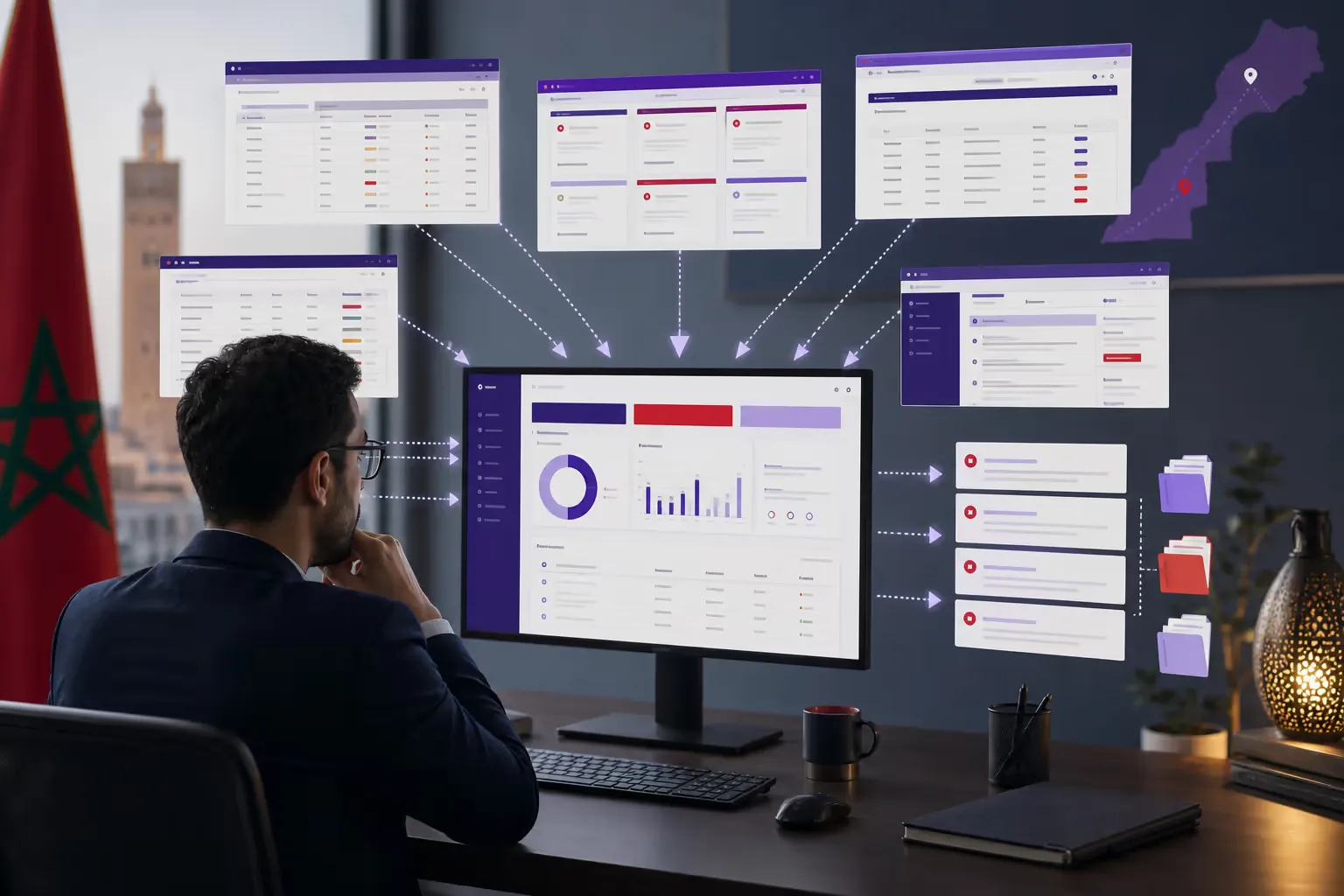
AFCON, World Cup and major projects: pride in Moroccan expertise across SGTM, TGCC and an entire ecosystem
Behind Morocco’s AFCON venues, 2030 projects and landmark infrastructure are engineers, craftspeople, SMEs and national groups. A fact-based look at SGTM, TGCC and their ecosystem.
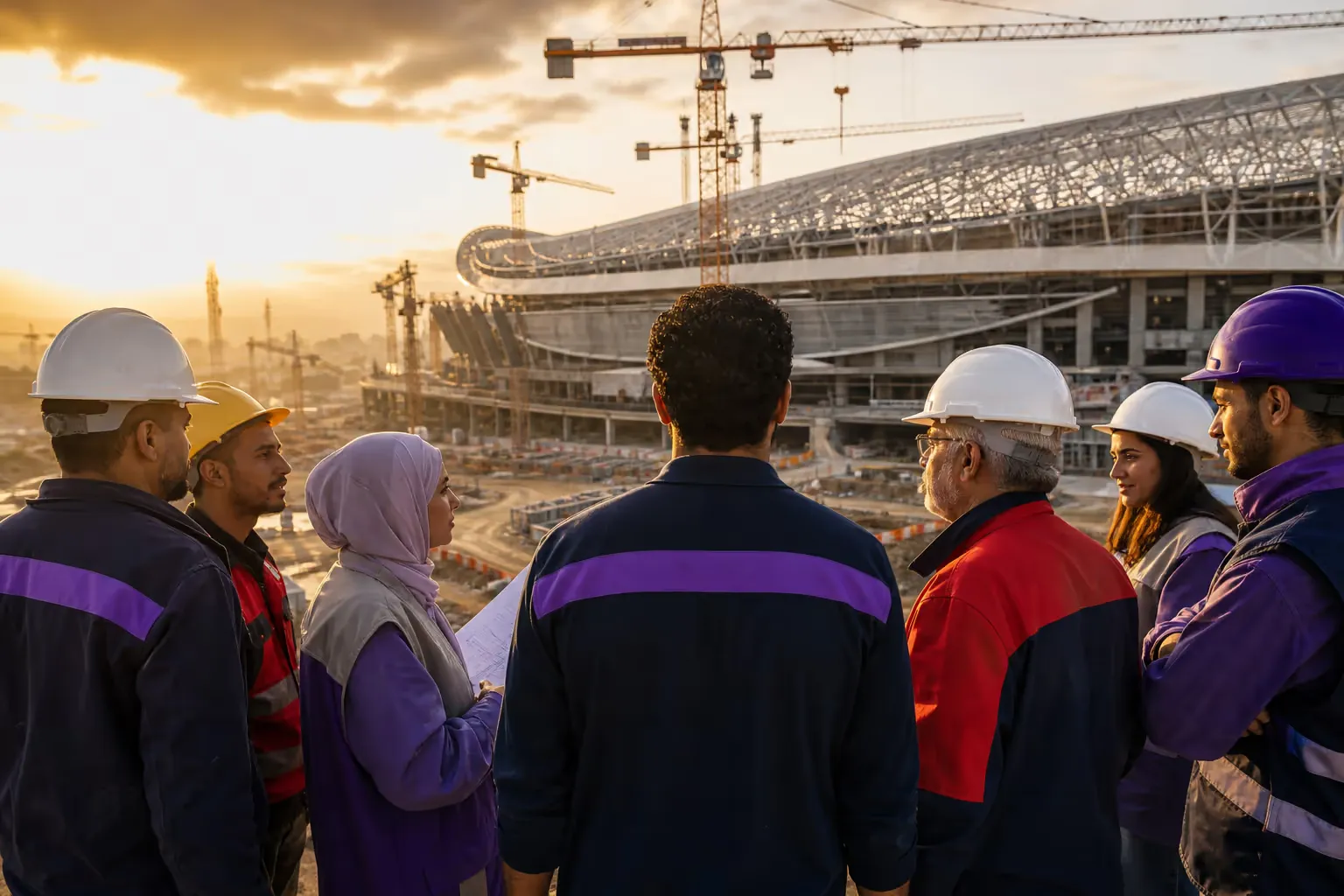
A stadium is never the work of one logo. Behind its silhouette are thousands of hours of design, formwork, welding, testing, logistics and coordination. Major contractors are visible; the engineers, craftspeople, SMEs and suppliers who make delivery possible are less so.
Short answer: pride is not only about building big. It is about consolidating in Morocco the skills required to design, coordinate and deliver complex projects—and transferring those methods to a new generation and a wider subcontracting ecosystem.
SGTM and TGCC are two documented examples. This article uses corporate and regulatory publications; it is not a ranking, investment recommendation or attempt to attribute the ecosystem’s collective work to two groups.
AFCON 2025: nine stadiums as a continental test
For AFCON 2025, played from 21 December 2025 to 18 January 2026, CAF and the local organizing committee selected six cities and nine stadiums: Rabat, Casablanca, Agadir, Marrakech, Fez and Tangier ( CAF announcement ).
The event created a concrete deadline for circulation, accessibility, pitches, hospitality, media, security, lighting and player facilities. It also tested operations—the moment when a structure becomes a service for tens of thousands of users.
Moving from AFCON to the 2030 World Cup is not only about capacity. It means capturing lessons on flows, maintenance, procedures, training and transport coordination. That is how project experience becomes a lasting industrial asset.
From national building to international reference
SGTM’s published portfolio spans the Grand Stade Hassan II, Grand Stade de Marrakech, Al Boraq high-speed rail structures, Casa-Voyageurs station, airports, dams and the Grand Theatre of Rabat. Its group page describes more than fifty years of activity and cites Mohammed V Airport, Hassan II Mosque packages, Tanger Med and other infrastructure.
TGCC publishes references in Morocco and abroad. Its 2025 annual financial report filed with the AMMC documents sports infrastructure and airport and urban projects.
These references show Moroccan companies moving beyond isolated trades to coordinating structures, architecture, equipment, deadlines, safety and many subcontractors.
Grand Stade Hassan II: national cooperation at scale
TGCC says the Grand Stade Hassan II contract in Benslimane was won by the SGTM–TGCC consortium ( company source ). A project of this scale requires architects, engineering firms, manufacturers, inspectors, suppliers and subcontractors.
The lasting measures of expertise will include final quality, safety, schedule, conformity, maintainability, transferred skills and partners’ ability to reuse the experience elsewhere.
Marrakech, Agadir and Fez: modernizing complex venues
TGCC’s 2025 report describes:
- the Marrakech stadium moving from 41,000 to 46,000 seats before 2028 with full coverage and new hospitality and access systems;
- a second Agadir phase aimed at around 45,000 seats and a covered venue;
- work in Fez and on training grounds;
- rapid delivery of the Al Madina/Al Barid stadium.
These are company-published statements. Final specifications and schedules should be verified with the contracting authority and project documentation.
Renovating an operating stadium differs from new construction: teams must diagnose existing structures, phase work, secure interfaces and upgrade systems without losing overall coherence.
What spectators do not see
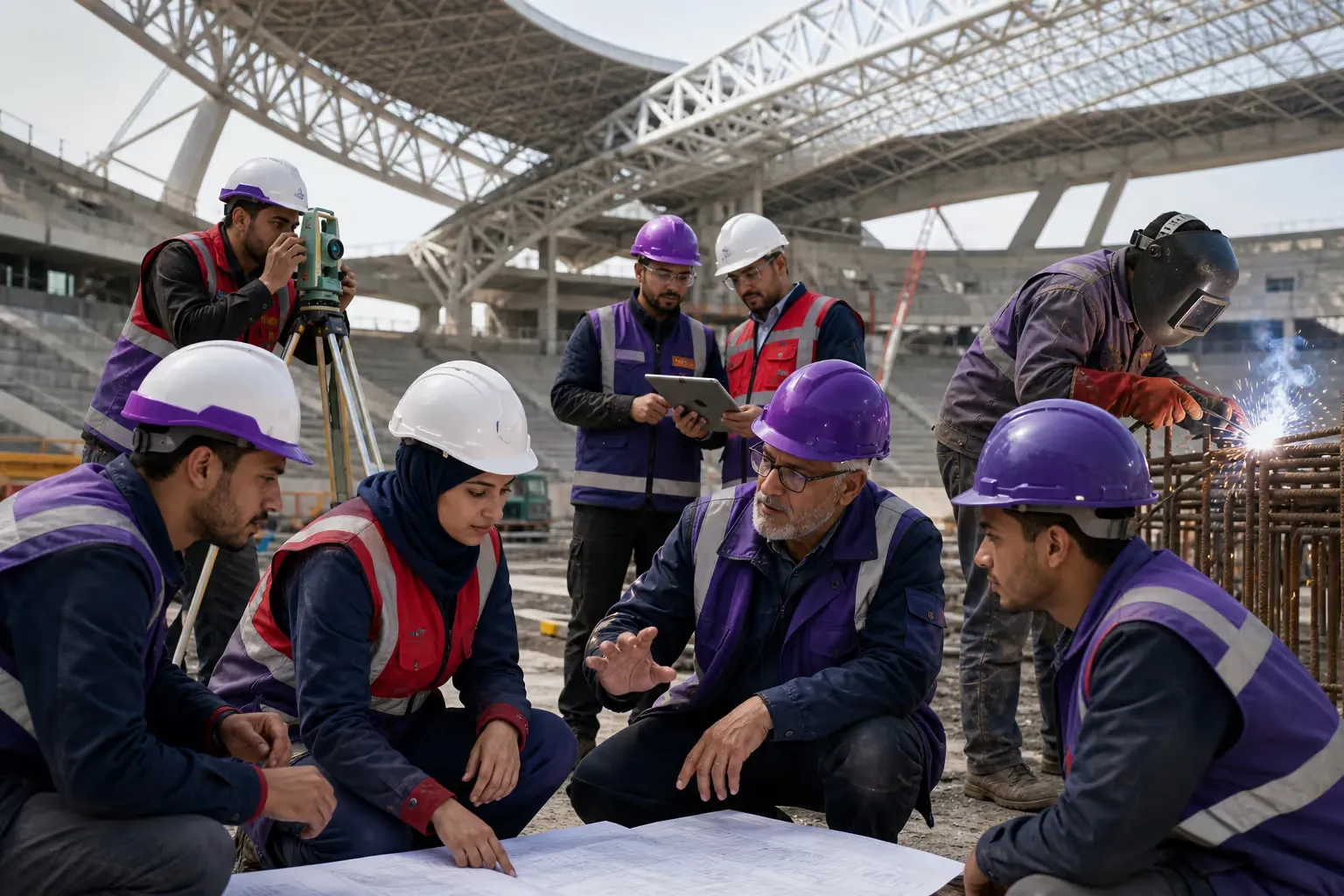
Preparation engineering covers methods, execution drawings, BIM coordination, lifting studies, site installations and safety scenarios. Interfaces connect steel, envelope, lighting, power, security networks, ticketing and access control; major failures often occur between packages. Supply chains must coordinate materials and special equipment with different lead times. Safety matters under height work, lifting, welding and intense schedules. Acceptance includes testing, as-built documentation, operator training, reservation clearance and initial maintenance.
Pride must include the right of everyone on site to return home safely.
Two trajectories, one growth in capability
| Dimension | What the published references show |
|---|---|
| Diversity | stadiums, rail, airports, cultural, water and urban projects |
| Scale | ability to mobilize teams and partners on complex programs |
| Integration | coordination of many trades and systems |
| Continuity | progression from domestic projects to regional references |
| Transfer | need to train engineers, technicians and craftspeople |
The TGCC 2024 annual report stated 110 active projects, 41 delivered during the year and a MAD 10.3 billion order book. Those figures indicate operating scale at that date; they do not predict future performance.
Pride also belongs to SMEs
Major contractors depend on design firms, surveyors, laboratories, material manufacturers, steel and façade specialists, electrical and HVAC firms, IT and security integrators, logistics providers, rentals, maintenance and operators.
For SMEs, participation in a landmark project can accelerate quality, HSE, planning and documentation maturity. But the reference is valuable only when the contract remains financially sustainable.
To enter the ecosystem, present three comparable references with exact scope and evidence, prequalify early, understand obligations flowing down from the main contract, protect working capital and document completed work. Our guides on payment deadlines and guarantee management help build a realistic scenario.
From pride to an industrial legacy
The 2030 legacy will also be measured by skills retained in Morocco, SMEs moving up the value chain, safety and quality becoming standard, solutions reused in schools and hospitals, expertise exported across Africa, and sustainable maintenance after ceremonies end.
The strongest pride rests on facts: safe, useful and maintainable projects delivered by teams whose expertise grows with every assignment.
Ogerant helps Moroccan companies identify relevant public tenders and focus on the opportunities they can genuinely win and execute. Discover Ogerant .
Company and regulatory sources
Written by
The Ogerant team
The Ogerant team analyzes public procurement in Morocco and beyond. We publish practical guides, trend analyses and field lessons that help SMEs win more public tenders.
See the Ogerant platform →